


E-commerce SEO Strategy
What's Included
A complete SEO roadmap built for online stores—focused on sales, not just traffic.
I optimize e-commerce sites to attract qualified visitors who are ready to buy. From product pages to site structure, every recommendation is designed to drive conversions and revenue.
Keyword research • Product page optimization • Category structure • AI search readiness • Schema markup • Competitor analysis • Content strategy
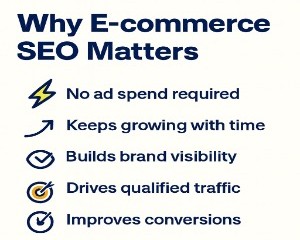
Why E-commerce SEO Matters
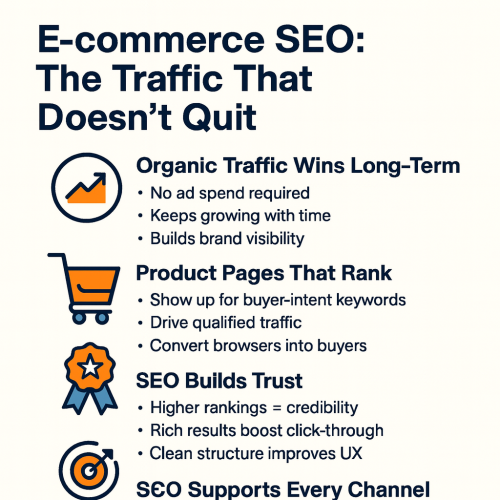
Paid traffic stops when you stop paying. Organic search keeps delivering. With the right SEO foundation, your product pages rank for terms your customers are actually searching—and keep bringing in traffic long after the work is done.
I don't just help you rank. I help you sell.
SEO
Matters
What an E-commerce SEO Strategy Uncovers
Titles, descriptions, or images that don't persuade visitors to buy
🗂️ Category Structure Issues
Poor navigation that buries your best products deep in the site
📄 Thin or Duplicate Content
Pages that search engines ignore—or penalize—for lacking uniqueness
🔍 Missing Schema Markup
No rich results for products, reviews, pricing, or availability
🎯 Keyword Gaps
High-intent terms you should rank for—but don't
📱 Mobile Checkout Friction
Steps where customers abandon carts on their phones
🤖 AI Visibility Opportunities
How your content appears (or doesn't) in AI search results like SearchGPT
My E-commerce SEO Process
1. Audit & Analysis
I review your product pages, category structure, technical foundation, and competitor landscape.
2. Keyword Mapping
Every page gets a target keyword strategy—no overlap, no cannibalization.
3. On-Page Optimization
Titles, meta descriptions, product descriptions, internal links—all optimized for search and users.
4. Schema Implementation
I ensure products, reviews, and breadcrumbs are marked up for rich results.
5. Content Strategy
Blog posts, buying guides, or category descriptions that attract and convert.
6. Ongoing Monitoring
Track rankings, traffic, and sales—adjust as needed.
Frequently Asked Questions
E-commerce SEO Strategy — Frequently Asked Questions
What is e-commerce SEO strategy?
+
-
E-commerce SEO strategy is a complete roadmap built for online stores, focused on sales, not just traffic. It optimizes your site to attract qualified visitors who are ready to buy — from product pages to site structure, every recommendation is designed to drive conversions and revenue.
What does an e-commerce SEO strategy cover?
+
-
Keyword research, product page optimization, category structure, AI search readiness, schema markup, competitor analysis, and content strategy.
What problems does this typically uncover?
+
-
Low-converting product pages with titles, descriptions, or images that don't persuade visitors to buy. Category structure issues that bury your best products deep in the site. Thin or duplicate content that search engines ignore or penalize. Missing schema markup, meaning no rich results for products, reviews, pricing, or availability. Keyword gaps — high-intent terms you should rank for but don't. Mobile checkout friction where customers abandon carts. And AI visibility opportunities — how your content appears, or doesn't, in AI search results.
Why does organic SEO matter if I already run paid ads?
+
-
Paid traffic stops the moment you stop paying. Organic search keeps delivering. With the right SEO foundation, your product pages rank for terms your customers are actually searching for — and keep bringing in traffic long after the work is done.
What is the process?
+
-
Six steps: an audit of your product pages, category structure, technical foundation, and competitors; keyword mapping so every page has a target strategy with no overlap or cannibalization; on-page optimization of titles, meta descriptions, product descriptions, and internal links; schema implementation so products, reviews, and breadcrumbs are marked up for rich results; content strategy through blog posts, buying guides, or category descriptions; and ongoing monitoring of rankings, traffic, and sales.
Is this only for large stores?
+
-
No — the same fundamentals (product page clarity, clean category structure, schema markup) apply whether you're running a handful of SKUs or a large catalog. The audit and keyword mapping steps scale to your store's size.